


Native American Presence on Plum Island, Part II


James Myster, (now retired) USFWS Regional Historic Preservation Officer and Archeologist visited Plum Island on July 26th once again as a presenter for our Native American Presence on Plum Island Field Day. James worked for the Bureau of Indian Affairs prior to USFWS and has a great interest in this subject.
We hiked to the eastern side of the island to view the Niagara Escarpment and talk about the
history of those that came before us. What did they eat? What kind of tools did they use? What was their family structure like? All of these questions remain unanswered, as they didn't leave enough clues to form a strong hypothesis. But as technology progresses, scientists and inquiring minds keep that door open.
The Paleo-Indians are thought to have come across the ice bridge, following the game (think mastodons and wooly mammoths) and changes in climate some 20,000 years ago. They left evidence of their presence in arrowheads and spears. Generations later (2,000-1,600 years ago), the Native Americans transitioned from a hunter-gatherer, nomadic society to a more sentient lifestyle, indicating that they felt a sense of security. Anthropologists identify this time period as the Middle Woodland Culture. It is in this time period that we find villages, pottery makers and indications of agriculture in Door County, specifically Washington and Rock Islands
We know that the Potawatomi were in the area, based on the writings of Jean Nicolet in 1634. Also present were the Menominee, Ojibwe, Ottawa, Winnebago (Ho-Chunk), Sauk, Petun and Huron as well as other related nations. Did they camp on Plum Island? Quite possibly. There were ample resources for food, trees for protection from the weather and material for housing, cooking, basket and pottery making, and boat building,
In the summers of 2013, 2014 and 2015 Myster and a group of archeology students from Hamline University in Minnesota were given permission to do a dig on the ruins of the first lighthouse on Plum Island, located on the southeast corner of the island. They had hoped to find evidence of Native American contact, but instead found artifacts from a normal 1850's lighthouse keeper family. While disappointing to Myster, the dig answered many questions that he had about why that light was abandoned only ten years after she was built. Not finding any physical evidence doesn't mean that they didn't meet though, just that they didn't leave any clues. However, we need to remember that the 1830 Indian Removal Act may have moved the Potawatomi by that time.
So, if you were asked where the best place would be for us to search for artifacts, where would that be?
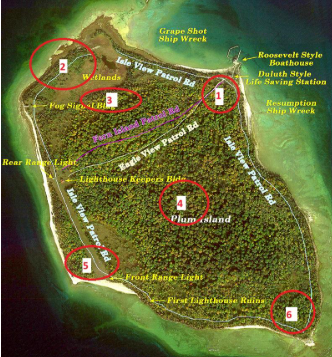
Still not sure? Come and join us in 2027 when James returns to help us to better understand those that came before us.


Comments